.svg)
Understanding Support Coordination and Why It Matters | NDIS Support Brisbane
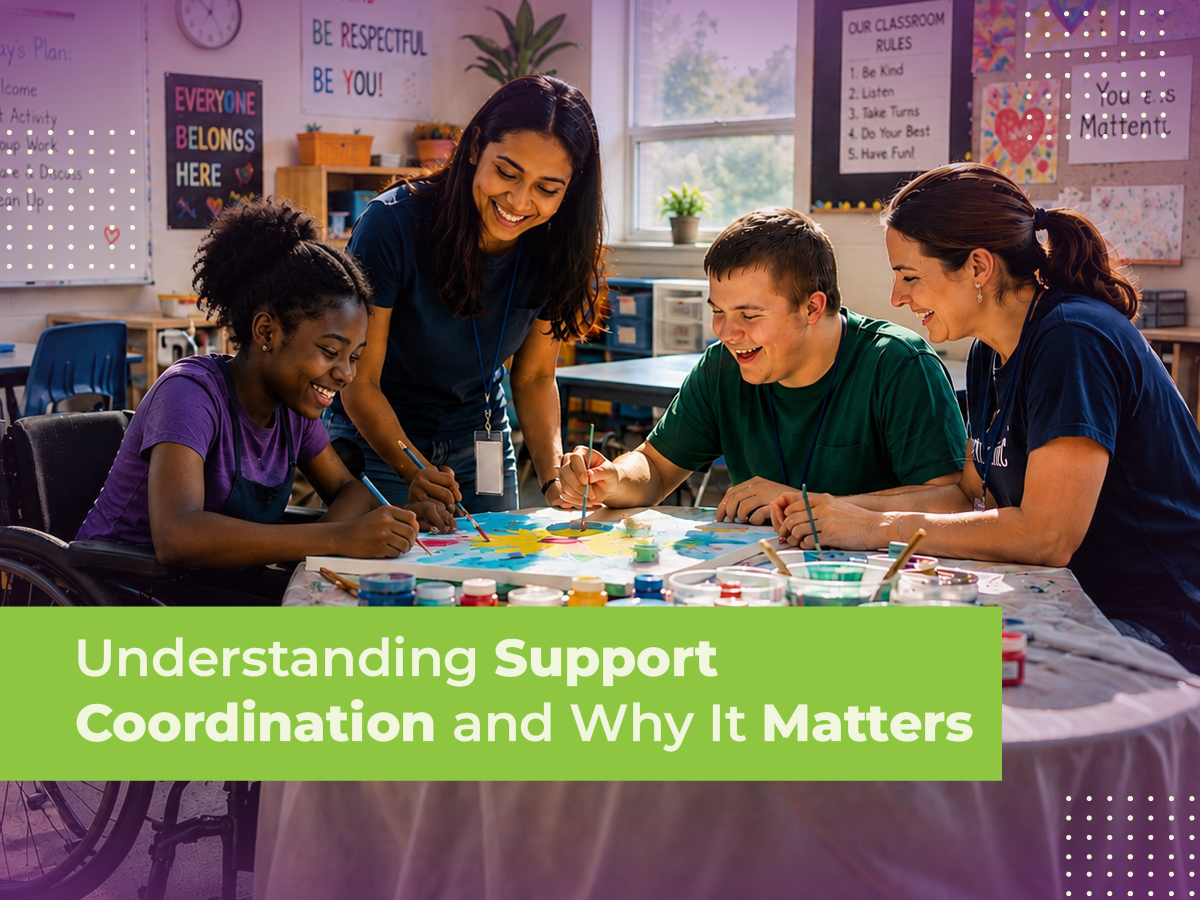
Support coordination sits at the centre of how many people experience the NDIS. It is the process that helps individuals understand their plan, connect with services, and organise support in a way that aligns with their goals. For many participants in Brisbane, it becomes the link between funding and real-life outcomes.
Within the broader system of ndis services, support coordination plays a practical and structured role. It helps people navigate choices, communicate with providers, and build a support network that is consistent and functional. Without this guidance, the system can feel complex and difficult to manage.
What Is Support Coordination?
Support coordination is a service within the NDIS that helps participants understand and implement their plan. It is delivered by trained professionals who work alongside individuals to connect them with appropriate services and support.
A support coordinator assists with identifying goals, finding disability support providers, and ensuring services work together in a coordinated way. This sits alongside the day-to-day assistance described in the role of an NDIS support worker in everyday life. The focus is on building capacity so that participants can gradually manage more aspects of their support independently over time.
How Does Support Coordination Work in Practice?
In everyday life, support coordination involves both planning and problem-solving. It may begin with reviewing an NDIS plan and understanding what funding is available. From there, the coordinator helps connect the participant with suitable services in Brisbane, including therapists, support workers, and community programs.
Typical responsibilities include:
- Explaining the NDIS plan in simple terms
- Linking participants with suitable providers
- Helping arrange service agreements
- Coordinating multiple supports to work together
- Assisting during changes or unexpected issues
This process ensures that ndis support is used effectively and aligned with the participant’s goals.
Why Support Coordination Matters in the NDIS
The NDIS provides funding, but navigating how to use that funding can be complex. Support coordination helps bridge that gap. It ensures that participants are not left to manage systems, providers, and decisions alone.
In Brisbane, where service options can vary across regions, support coordination NDIS Brisbane services help individuals make informed choices and avoid service gaps. This improves consistency in care and reduces stress for participants and families.
The Role of Disability Support Providers
Disability support providers are a key part of the coordination process. They deliver the day-to-day services that participants rely on, such as personal care, community access, and skill development.
Support coordinators work closely with these providers to ensure services align with the participant’s plan. This collaboration is central to how disability service providers support independent living, helping maintain consistency and avoid duplication or overlap of supports.
Levels of Support Coordination
Support coordination is delivered in different levels depending on individual needs:
- Support Connection – basic help to understand and connect with services
- Support Coordination – ongoing assistance to manage and coordinate supports
- Specialist Support Coordination – intensive support for complex situations
Each level is designed to meet different circumstances, ensuring that ndis services remain flexible and responsive.
How Support Coordination Builds Independence
Support coordination is not only about managing services. It is also about building capacity. Over time, participants learn how to communicate with providers, understand their funding, and make informed decisions.
Through consistent guidance, individuals develop confidence in managing their own supports. This shift supports long-term independence and reflects what true inclusion looks like in everyday life.
Support Coordination in Brisbane Communities
In Brisbane, support coordination plays an important role in connecting participants with local services. It helps individuals access regional disability support services, community programs, and healthcare providers within their area.
Local knowledge allows coordinators to recommend services that are practical, accessible, and aligned with the participant’s environment. This improves the quality and relevance of support.
The Relationship Between Participants and Coordinators
A strong support coordination relationship is built on trust, communication, and consistency. Coordinators take time to understand the participant’s goals, preferences, and challenges.
This relationship ensures that decisions are not only administrative but also personal and meaningful. It helps participants feel supported while maintaining control over their own choices. Learn more about the CALDS approach to person-centred support.
Why Support Coordination Improves Outcomes
Support coordination improves outcomes by ensuring that all parts of an NDIS plan work together effectively. It reduces confusion, strengthens communication between providers, and ensures that supports are delivered consistently.
When combined with ndis services, disability service providers, and local support networks, coordination creates a structured system that supports independence and long-term wellbeing. Get started with CALDS to find support coordination that fits your plan.